A UPS battery is a rechargeable energy storage device that supplies backup electricity through an uninterruptible power supply (UPS) when the main power source fails. It helps keep computers, internet equipment, security systems and other connected appliances operating during power outages.
UPS batteries are commonly available in lead-acid and lithium technologies, with different capacities and charging requirements. The right battery depends on the electrical load, required backup duration and UPS compatibility. Understanding what a battery is helps explain why energy storage is essential for reliable backup power.
How Does a UPS Battery Work?
A UPS system normally draws electricity from the main power supply while maintaining its battery at an appropriate charge level. When electricity fails, the UPS uses stored battery energy to continue powering connected equipment.
The battery delivers direct current (DC), which the UPS inverter converts into alternating current (AC) for connected appliances. The exact switching behavior depends on the UPS design. Standby and line-interactive models typically have a short transfer interval, while online double-conversion UPS systems continuously supply power through their inverter.
A UPS vs inverter comparison explains these operating differences, while our inverter battery guide covers batteries used in longer-duration household backup systems.
Main Types of UPS Batteries
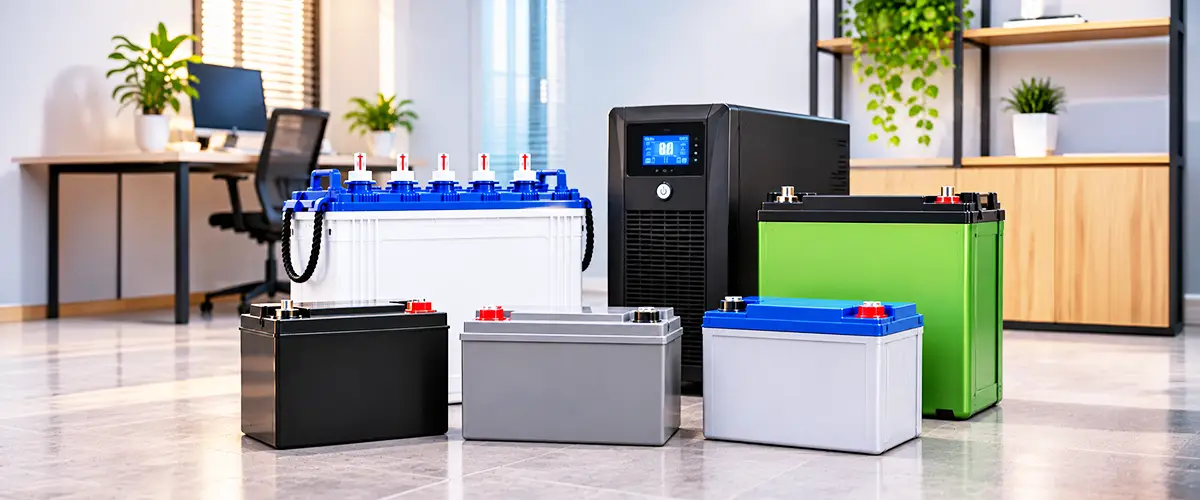
Different UPS applications use different battery chemistries. Compact computer UPS units commonly contain sealed lead-acid batteries, while larger external-battery systems may support tubular or compatible lithium batteries.
| Battery Type | Main Characteristics | Common UPS Application |
| AGM lead-acid | Sealed, low routine maintenance | Desktop and office UPS |
| Gel lead-acid | Sealed, requires suitable charging voltage | Selected backup systems |
| Flooded lead-acid | Requires electrolyte maintenance | External-battery installations |
| Tubular lead-acid | Designed for repeated cycling | Household and extended backup |
| Lithium / LiFePO4 | Higher usable capacity, low routine maintenance | Compatible modern UPS systems |
A conventional AGM battery is often used inside compact UPS equipment because of its sealed construction. A tubular battery for UPS may be suitable for systems designed to use larger external battery banks.
Modern lithium batteries for UPS can offer advantages in weight and cycling performance, but they must be supported by the UPS manufacturer.
Understanding UPS Battery Voltage, Ah, Wh and VA
UPS battery specifications can be confusing because the battery and the UPS itself have different electrical ratings.
| Specification | Unit | What It Means |
| Battery voltage | V | Nominal DC operating voltage |
| Battery capacity | Ah | Rated charge capacity under specified conditions |
| Stored energy | Wh | Nominal energy stored in the battery |
| Connected load | W | Actual power consumed by appliances |
| UPS output rating | VA and W | Maximum supported electrical load |
| Backup duration | Minutes or hours | Expected operating time during an outage |
A battery rated at 12V and 100Ah contains approximately 1,200Wh of nominal energy. However, its actual usable energy depends on discharge rate, battery condition and permitted discharge limits.
The relationship between these ratings is covered in what does Ah mean on a battery and battery watt-hours.
It is also important to remember that a 1,000VA UPS does not necessarily support a 1,000W load. The manufacturer’s watt rating and surge limitations must be checked separately.
How Long Can a UPS Battery Provide Backup?
UPS backup time depends mainly on battery capacity, connected load, inverter efficiency and allowable discharge depth. A higher-capacity battery can generally support the same load for longer, but actual performance varies with battery chemistry and discharge current.
Consider an external 12V 100Ah lead-acid battery connected to a compatible UPS, supplying a constant 150W load.
| Parameter | Example Value |
| Nominal battery energy | 1,200Wh |
| Assumed usable discharge | 50% |
| Assumed inverter efficiency | 85% |
| Connected load | 150W |
| Simplified backup estimate | 3.4 hours |
The simplified calculation is:
Backup Time = 1,200 × 0.50 × 0.85 ÷ 150 = 3.4 hours
This is an illustrative energy estimate, not a guaranteed runtime. Lead-acid batteries can deliver less capacity at higher discharge rates, and UPS standby consumption may further reduce actual backup time. For an accurate method, see how to calculate UPS backup time or the broader battery runtime calculation guide.
Which UPS Battery Capacity Do You Need?
The correct battery capacity depends on what you want to power and how long you need backup. A computer that requires a few minutes for safe shutdown has different storage requirements from a household system supplying fans and lights for several hours.
First, identify the appliances and their combined power consumption in watts. Next, determine the required backup duration and check whether the UPS supports the necessary battery capacity and discharge current.
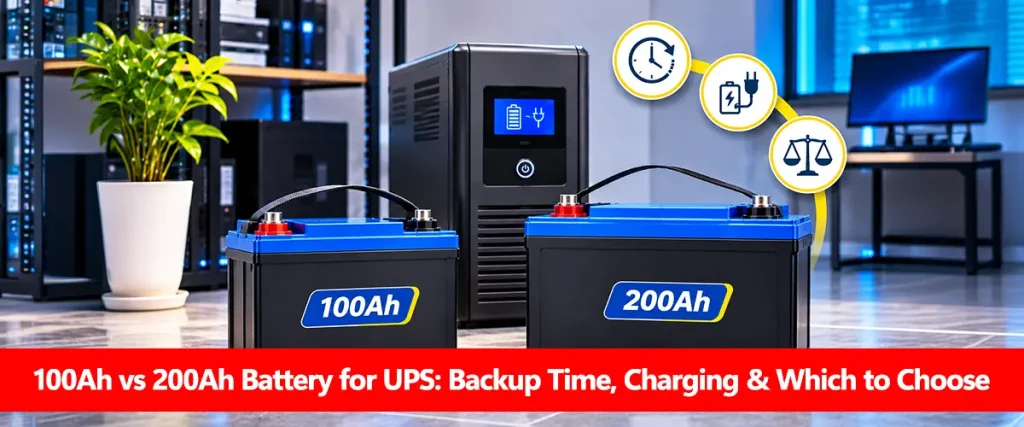
A larger Ah rating does not automatically guarantee compatibility. Some UPS units have fixed internal battery configurations and charging systems that cannot support larger external batteries. Our how to choose UPS battery capacity guide explains the selection process, while 100Ah vs 200Ah battery for UPS compares common capacity options.
UPS Battery Charging and Compatibility
A UPS battery must be charged using the voltage and current limits specified for its chemistry. Most UPS systems include a charging circuit that maintains battery readiness while the main electricity supply is available.
Lead-acid batteries commonly use controlled charging and an appropriate float voltage during standby operation. Lithium batteries require different charging settings and may need communication with a compatible battery management system.
Before replacing a battery, check:
- Required battery voltage and approved chemistry.
- UPS charging voltage and current.
- Permitted battery capacity and discharge current.
- Manufacturer-approved replacement batteries.
- Connection arrangement and electrical protection.
- Temperature and ventilation requirements.
A UPS designed for sealed lead-acid batteries should not automatically receive a lithium replacement. Our lead-acid charger for lithium battery guide explains this risk, while float charging covers a common lead-acid standby-charging method.
Where Are UPS Batteries Used?
UPS batteries support equipment that must remain powered during interruptions or shut down safely.
Common applications include:
- Computers and workstations: Prevent sudden shutdowns and data loss.
- Internet routers: Maintain connectivity during short outages.
- CCTV and security equipment: Support monitoring systems.
- Office networking: Provide temporary power to connected devices.
- Home backup: Supply selected lights, fans and essential appliances through suitable systems.
A small desktop UPS usually prioritizes immediate protection and short runtime. A larger home backup battery installation may prioritize several hours of electricity supply.
The UPS must still have adequate watt and VA ratings for the connected equipment. Adding batteries does not increase the UPS inverter’s maximum output power.
Lead-Acid or Lithium: Which Is Better for UPS?
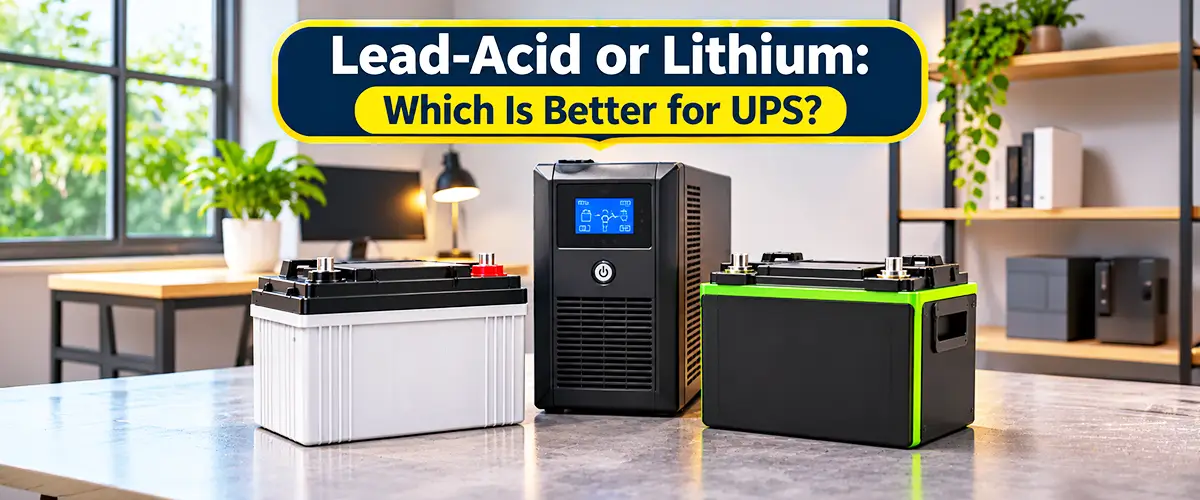
Lead-acid batteries remain common because they are widely available and relatively affordable initially. AGM designs suit many compact UPS systems, while tubular deep-cycle batteries can be useful for compatible extended-backup applications.
Lithium batteries, particularly LiFePO4, generally offer higher usable energy, longer cycle-life potential and reduced routine maintenance. Their main considerations include initial cost, charging requirements and electronic protection.
The best choice depends on the application. Our best battery for UPS guide covers overall selection, while LiFePO4 battery for UPS examines lithium iron phosphate technology specifically. If upgrading an older unit, review replace UPS lead-acid battery with lithium before changing battery chemistry.
How Long Does a UPS Battery Last?
UPS battery service life varies with chemistry, temperature, charging conditions and usage. Batteries that remain on standby experience calendar aging, while frequently discharged batteries also experience cycle-related wear.
High temperatures, prolonged undercharging and repeated deep discharge can shorten battery life. The manufacturer may recommend replacement based on service age, testing results or remaining capacity.
Signs of deterioration include shorter backup duration, repeated battery warnings, swelling, leakage or unusual heating. Our how long do UPS batteries last guide explains service-life factors, while UPS battery draining fast covers common causes of unexpected runtime loss.
Common UPS Battery Selection Mistakes
Choosing a UPS battery using only its Ah rating can lead to poor performance or compatibility problems.
Avoid these mistakes:
- Confusing UPS VA rating with available watts.
- Ignoring appliance starting or surge loads.
- Assuming nominal battery capacity is fully usable.
- Selecting a battery with the wrong voltage.
- Installing a chemistry unsupported by the charging system.
- Connecting extra batteries to a UPS not designed for expansion.
- Ignoring ventilation, temperature and battery condition.
- Choosing the lowest price without reviewing warranty and specifications.
Before purchasing, compare the UPS manufacturer’s approved battery options and check whether the equipment can deliver the required output power and runtime. For Pakistan-specific buying decisions, read best UPS battery in Pakistan and UPS battery price in Pakistan.
Conclusion
A UPS battery stores electrical energy so that connected equipment can continue operating when the main power supply fails. The right battery must match the UPS voltage, charging system, output requirements and desired backup duration.
AGM and other lead-acid batteries remain common in traditional UPS equipment, while compatible lithium systems provide additional options for modern backup applications. Comparing usable capacity, chemistry, charging compatibility and manufacturer specifications helps ensure reliable and safe operation.
Frequently Asked Questions
What Is a UPS Battery Used For?
A UPS battery provides stored electricity to compatible UPS equipment during power outages. It helps keep connected devices operating temporarily or allows them to shut down safely.
Is a UPS Battery Different From an Inverter Battery?
Both store electrical energy, but the intended system and operating requirements may differ. Compact UPS units often use approved internal battery packs, while household inverters may support larger external battery banks.
Which Battery Is Best for a UPS?
The best battery is the one approved for the specific UPS model and required backup duration. AGM lead-acid is common in desktop units, while suitable tubular and lithium batteries may be used in compatible systems.
How Many Hours Does a 100Ah UPS Battery Last?
Runtime depends on battery voltage, usable capacity, load and inverter efficiency. A 100Ah rating alone is insufficient to determine backup duration.
Can I Use a 200Ah Battery Instead of a 100Ah Battery?
Only if the UPS supports the battery’s voltage, capacity, charging requirements and discharge characteristics. A larger battery may increase runtime but can also exceed the UPS manufacturer’s approved configuration.
Can I Use a Lithium Battery in a Lead-Acid UPS?
Not automatically. The UPS charger and protection system must support the specific lithium battery. An unapproved replacement may cause charging problems or safety hazards.
Does a UPS Battery Charge Automatically?
Most UPS systems charge their batteries while suitable mains electricity is available. Charging behavior depends on the UPS design and battery chemistry.
Why Is My UPS Battery Backup Time So Short?
Possible causes include high connected load, battery aging, incomplete charging, excessive temperature or internal battery problems. The UPS and battery should be checked against the manufacturer’s specifications.
How Often Should a UPS Battery Be Replaced?
There is no universal replacement interval. Battery condition, chemistry, operating temperature and the manufacturer’s service recommendations determine when replacement is appropriate.