How long do car batteries last? Most conventional car batteries last approximately 3 to 5 years, although extreme temperatures, frequent short trips, charging problems and driving habits can shorten their service life. In hot climates such as Pakistan, some batteries may need replacement closer to the three-year mark, while well-maintained batteries in favorable conditions can last longer.
A car battery gradually loses its ability to store energy and deliver the high starting current required by the engine. Knowing its age, checking its condition and understanding the warning signs can help prevent unexpected breakdowns. Our car battery guide covers general battery care, while this article focuses on lifespan, aging and replacement timing.
Average Car Battery Lifespan by Operating Conditions
The typical 3–5-year estimate is a useful starting point, but battery life is not identical for every vehicle.
Climate, vehicle usage and charging performance can significantly change how quickly a battery deteriorates.
| Operating Condition | General Lifespan Expectation |
| Moderate climate and regular driving | Often within the 3–5-year range |
| Very hot climate | May fail closer to 3 years or earlier |
| Frequent short trips | Greater risk of premature deterioration |
| Long periods without driving | Higher risk of discharge-related damage |
| Reliable charging and regular maintenance | Better chance of reaching normal service life |
| Persistent charging or electrical faults | Can fail considerably earlier |
These are general expectations rather than fixed replacement intervals. AAA reports that batteries in hotter climates typically have shorter lives than those operating in cooler conditions. A battery’s age should therefore be considered together with its actual starting performance and the results of car battery testing.
Why Do Car Batteries Wear Out Over Time?
Most petrol and diesel passenger cars use a rechargeable lead-acid starter battery. It stores electrical energy through chemical reactions and supplies a high current when the starter motor turns the engine. Over time, normal chemical aging reduces the battery’s ability to retain charge and deliver sufficient starting power. Factors such as plate corrosion, loss of active material and prolonged undercharging can contribute to deterioration. A battery may still show a normal voltage reading but struggle to start the vehicle because its internal resistance has increased. Understanding how a car battery works helps explain why a fully charged battery is not necessarily a healthy battery. Unlike a household deep-cycle battery, a conventional car starting battery is designed for brief bursts of high current rather than repeated deep discharge.
How Heat Affects Car Battery Lifespan in Pakistan
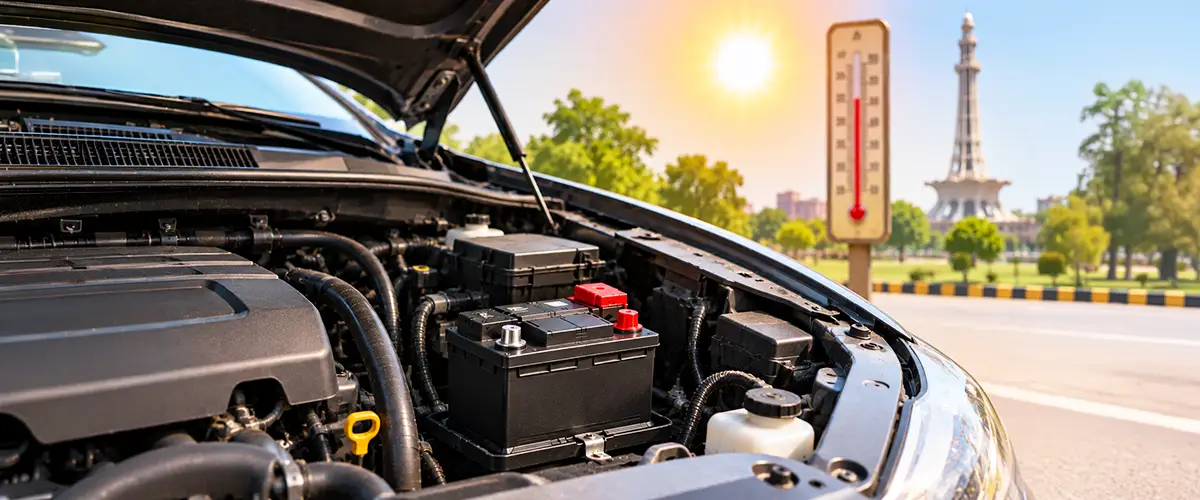
High temperature is one of the most important factors affecting car battery life.
Heat accelerates chemical deterioration inside lead-acid batteries. It can also increase water loss in certain flooded battery designs and contribute to internal corrosion.
In Pakistan, vehicles regularly experience high ambient temperatures, especially during summer in cities such as Lahore, Karachi and Multan. Under-bonnet temperatures can be substantially higher than the surrounding air.
Even if a battery continues starting the vehicle normally in summer, heat-related deterioration may become noticeable later when starting conditions become more demanding.
Consumer Reports and AAA both identify extreme heat as a major factor in reduced battery lifespan. Parking in shade when practical, keeping the battery securely mounted and maintaining the vehicle’s cooling and charging systems can help reduce avoidable stress.
Why Frequent Short Trips Reduce Battery Life
Every engine start uses a portion of the battery’s stored energy. The alternator normally replenishes that energy while the engine runs. However, when a car is driven only a short distance, the charging system may not have enough time to replace the electricity consumed during starting and vehicle operation.
Repeated short journeys can leave the battery partially discharged, particularly when headlights, air conditioning controls and other electrical equipment are also in use. VARTA explains that frequent short trips may produce a negative charging balance, especially in older batteries with reduced charge acceptance.
This is particularly relevant for vehicles used mainly for nearby shopping, school runs or brief daily commutes. For vehicles that regularly struggle to start, our car battery keeps dying guide explains how charging problems and usage patterns can contribute.
How Long Does a Car Battery Last Without Driving?
A car battery continues supplying a small amount of electricity even when the engine is switched off. Security alarms, electronic control modules, clocks and other systems may consume standby power. The battery also experiences natural self-discharge. Consequently, a vehicle parked for several weeks may develop starting problems, particularly if its battery is old or was not fully charged before storage. Interstate Batteries notes that some vehicles may encounter battery problems after approximately four weeks to two months without driving. The actual period varies considerably depending on battery condition and standby electrical demand. A battery that discharges overnight, however, may indicate an abnormal electrical load rather than ordinary storage-related discharge.
Read car battery draining overnight for that specific problem. If a car will remain unused for an extended period, a manufacturer-approved maintenance charger may help preserve battery charge.
Does Battery Type Affect Lifespan?
Different automotive battery technologies are designed for different electrical requirements.
Conventional flooded lead-acid batteries are common in everyday vehicles, while enhanced flooded batteries (EFB) and absorbent glass mat (AGM) batteries support selected vehicles with more demanding electrical systems.
| Battery Type | Lifespan Consideration | Typical Application |
| Conventional flooded lead-acid | Commonly around 3–5 years | Standard vehicles |
| EFB | Designed for improved cycling performance | Selected start-stop vehicles |
| AGM | Can offer greater cycling durability in suitable applications | Start-stop and electrically demanding vehicles |
| Specialized lithium starter battery | Highly model-dependent service life | Manufacturer-approved applications |
AGM batteries may provide advantages in certain operating conditions, but they do not automatically last longer in every vehicle.
A vehicle designed for AGM or EFB technology should use the replacement chemistry specified by its manufacturer. Our AGM battery and flooded lead-acid battery guides explain the technologies separately.
How Charging Problems Shorten Car Battery Life
A healthy battery depends on a functioning charging system. If the alternator does not replenish battery energy correctly, the battery may remain undercharged for extended periods. Repeated undercharging can encourage sulfation, which reduces the effective performance of lead-acid batteries. Excessive charging voltage can also cause damage, heating and water loss.
A conventional car’s charging voltage is generally higher than its resting battery voltage, but modern vehicles may use intelligent charging systems that vary the output according to operating conditions. Therefore, a single voltage reading should not be treated as a complete diagnosis.
Our guides on car battery voltage and battery charging voltage explain these differences. If a battery repeatedly becomes discharged after driving, both the battery and charging system should be tested.
How to Estimate Whether Your Battery Is Near the End of Its Life
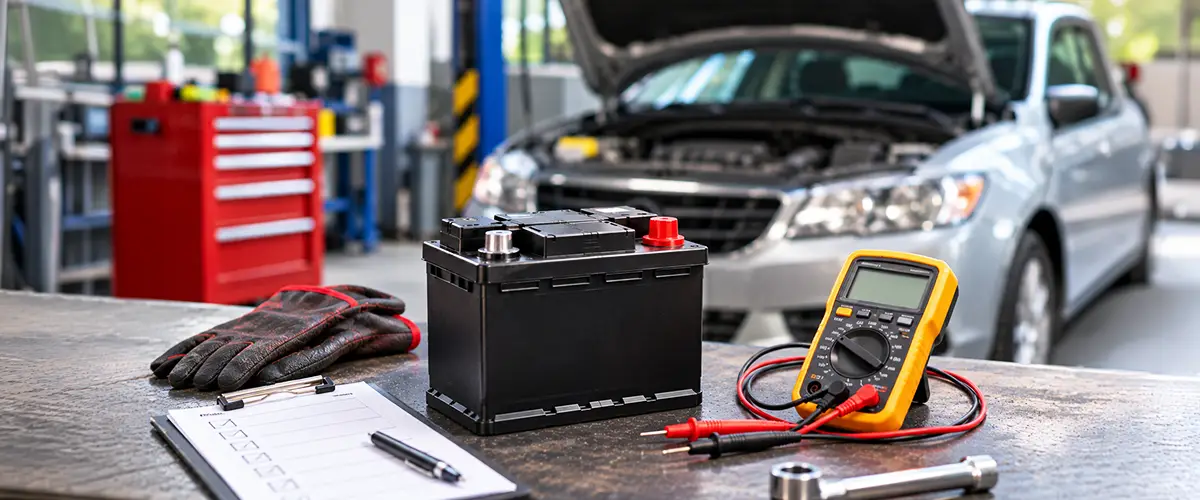
There is no reliable formula that predicts exactly how many months a particular car battery has left. However, you can assess its risk using age, driving conditions and test results.
Consider these illustrative situations:
| Battery Situation | Practical Action |
| 1 year old, starts normally | Continue routine inspection |
| 2 years old, exposed to intense summer heat | Arrange periodic battery testing |
| 3 years old, frequent short trips | Test condition and starting capability |
| 4 years old, slow starting | Arrange prompt battery and charging-system testing |
| 5 years old, no symptoms | Test regularly and plan for possible replacement |
| Any age, swollen or leaking case | Stop use where safe and seek professional help |
This decision table is intended for maintenance planning, not as a guarantee that a battery will fail at a particular age. Consumer Reports recommends annual load testing after approximately two years in warmer climates, while AAA also supports more frequent inspections as batteries age. The important distinction is between state of charge and state of health. A battery can be fully charged while its starting capability has deteriorated.
Does Voltage Tell You How Much Battery Life Is Left?
Voltage is useful for assessing charge condition, but it does not directly reveal how many years of service remain. A rested 12V lead-acid car battery commonly reads around 12.6–12.8V when well charged. Lower voltage may indicate partial discharge. However, even a battery measuring approximately 12.6V may have insufficient starting-current capability because of internal aging.
| Resting Voltage | General Charge Indication |
| 12.6–12.8V | Generally well charged |
| Around 12.4V | Partially discharged |
| Around 12.2V | Significantly discharged |
| Around 12.0V | Low charge; investigate |
These approximate readings depend on battery design, temperature and whether the battery has sufficiently rested after charging or use.
A proper battery-health assessment may require a conductance or load test. Starting-current performance is especially relevant because the battery must deliver adequate cold cranking amps to operate the starter motor.
Signs That Your Car Battery May Need Replacement
An aging battery may develop symptoms gradually, although sudden failures are also possible. Slow engine cranking, repeated jump-starting and starting difficulty after parking are common warning signs. Some vehicles may also display electrical-system warnings. Visible corrosion around battery terminals can interfere with electrical connections, but it does not automatically mean the battery itself has failed. A battery or charging warning light may indicate an alternator or electrical-system fault rather than a defective battery.
For accurate diagnosis, consult signs of a bad car battery and car battery corrosion. If the battery case is bulging, cracked, leaking or unusually hot, do not attempt to charge or jump-start it. Seek qualified assistance.
How to Extend Car Battery Lifespan
While battery aging cannot be stopped completely, proper operating conditions can help prevent premature failure.
- Limit extreme heat exposure: Use shaded or covered parking when practical.
- Avoid repeated undercharging: Ensure the charging system is operating correctly.
- Reduce unnecessary electrical loads: Switch off lights and accessories when parking.
- Secure the battery: Excessive vibration can damage internal components.
- Keep connections in good condition: Address loose terminals and corrosion.
- Monitor battery health: Arrange periodic testing as the battery ages.
- Maintain parked vehicles properly: Use an approved maintenance charger if appropriate.
A suitable car battery charger can help restore or maintain charge when used according to manufacturer instructions. However, charging an old battery cannot reverse all internal deterioration. If the battery fails an appropriate performance test, replacement may still be necessary.
When Should You Replace a Car Battery?
A car battery does not always need replacement immediately upon reaching three years of age. Equally, waiting until it completely fails can leave you stranded. For vehicles used in hot climates, it is sensible to begin paying closer attention to battery condition after approximately two to three years. If the engine starts slowly, the battery frequently loses charge or a professional test shows inadequate starting performance, replacement should be considered. The new battery must match the vehicle’s required technology, dimensions, terminal arrangement, Ah rating and CCA specification. Our car battery size guide explains these compatibility requirements.
For installation considerations, see how to replace a car battery. Buyers researching locally available options can consult best car battery in Pakistan.
Conclusion
So, how long do car batteries last? Most conventional car batteries have a typical service life of three to five years, but Pakistan’s summer heat, repeated short journeys and charging problems may shorten that period.
Battery age alone cannot confirm whether replacement is necessary. Starting performance, correct charging and professional battery testing provide a better basis for making the decision. Regular inspections, suitable maintenance and choosing a vehicle-compatible replacement can help reduce unexpected starting failures.
Frequently Asked Questions
Can a Car Battery Last 5 Years?
Yes. Some car batteries remain reliable for five years or longer, especially under favorable operating conditions. However, a five-year-old battery should be tested regularly because failure risk increases with age.
How Long Do Car Batteries Last in Pakistan?
Many car batteries fall within the general 3–5-year range, but severe summer heat and frequent short trips can cause earlier deterioration. Actual lifespan depends on vehicle and battery condition.
Is a 3-Year-Old Car Battery Old?
Three years is a reasonable age to begin regular performance testing, particularly in hot climates. A healthy battery does not automatically require replacement at three years.
Do AGM Car Batteries Last Longer?
AGM batteries can offer improved cycling performance in appropriate vehicles, but their actual service life depends on temperature, charging conditions and compatibility.
Does Driving Every Day Extend Battery Life?
Regular driving can help maintain charge when the charging system is healthy. However, very short daily journeys may still leave the battery undercharged.
How Long Can a Car Battery Sit Without Being Used?
Some vehicles may develop battery problems after several weeks without driving, while others can sit longer. Battery health, electrical standby load and temperature affect the outcome.
Does a Higher Ah Battery Last More Years?
Not necessarily. Higher Ah means greater rated charge capacity, not a guaranteed longer service life. Battery chemistry, charging and vehicle compatibility are more important.
Can a Car Battery Last 10 Years?
It is possible but uncommon. A battery approaching that age should receive careful testing, and replacement planning is advisable even if it still starts the vehicle.
Should I Replace My Car Battery Before It Dies?
Consider proactive replacement when the battery is aging and tests poorly or shows repeated starting problems. A professional assessment can help avoid unnecessary replacement while reducing breakdown risk.