Solar battery maintenance involves checking battery condition, charging performance, temperature, electrical connections and other factors that affect energy storage reliability. Proper maintenance helps prevent avoidable battery deterioration and keeps a solar backup system operating safely.
The maintenance required depends on battery chemistry. Flooded lead-acid batteries need regular electrolyte checks, while lithium batteries generally require less routine servicing but still depend on correct charging settings and electronic protection. Whether your solar batteries support a hybrid inverter or an off-grid installation, following manufacturer recommendations is essential.
Do Solar Batteries Need Regular Maintenance?
Yes, all solar battery systems benefit from periodic inspection and monitoring, although some require considerably less hands-on maintenance than others. Regular checks help identify charging faults, abnormal temperatures and declining battery performance before they cause serious problems.
A LiFePO4 battery does not need water refilling, but its battery management system and operating conditions should be monitored. A flooded tubular battery generally requires additional attention because electrolyte levels can decrease during charging.
Solar Battery Maintenance by Battery Type
Different battery chemistries have different maintenance requirements. The following comparison provides a practical overview.
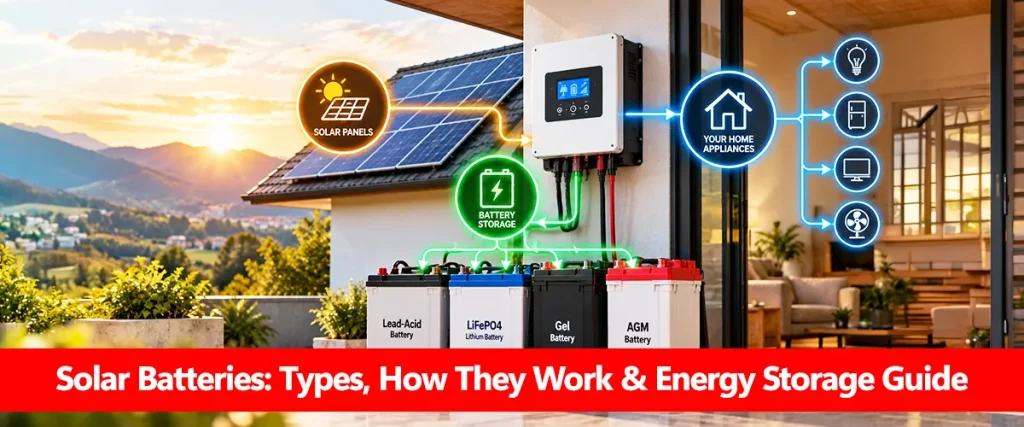
| Battery Type | Maintenance Requirements | Important Consideration |
| LiFePO4 | Monitor BMS, temperature and connections | Use compatible charging settings |
| Other lithium-ion | Monitor protection systems and battery condition | Follow chemistry-specific limits |
| Flooded tubular | Check electrolyte, terminals and ventilation | Distilled-water maintenance |
| AGM | Inspect terminals and charging conditions | No routine water refilling |
| Gel | Monitor charging voltage and temperature | Avoid unsuitable charging settings |
Lithium batteries generally require less routine physical maintenance than flooded lead-acid batteries. However, every battery needs appropriate electrical protection and operating conditions. Our lead acid vs lithium solar battery guide explains how chemistry influences long-term ownership requirements.
How to Maintain Flooded Lead-Acid Solar Batteries
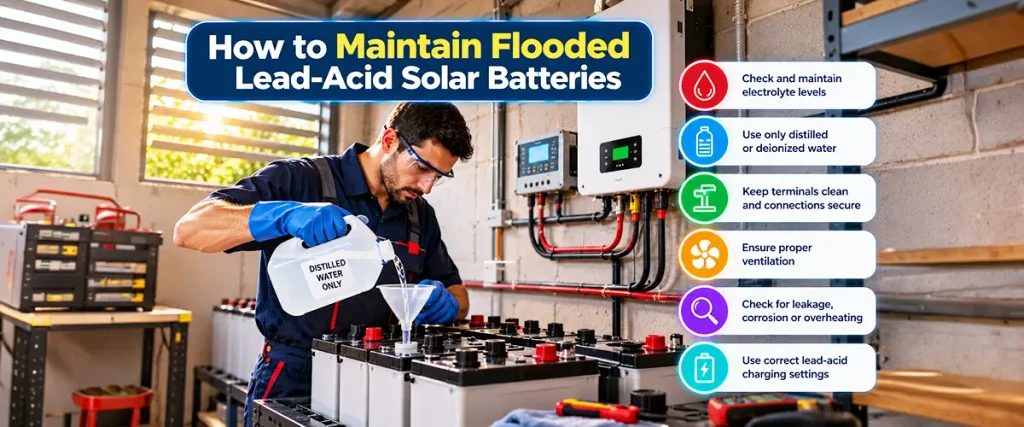
Flooded lead-acid batteries contain liquid electrolyte that can lose water during charging. Electrolyte levels should be inspected according to the manufacturer’s recommended schedule, and only approved distilled or deionized water should be used when replenishment is necessary.
For many flooded designs, the final water adjustment is performed after charging because electrolyte levels change during the charging cycle. If plates are exposed before charging, the manufacturer’s procedure may require adding only enough water to cover them before completing the charge. Never add sulfuric acid as routine maintenance or overfill the cells.
Important flooded battery maintenance checks include:
- Inspect electrolyte levels at the recommended intervals.
- Follow manufacturer-approved distilled-water procedures.
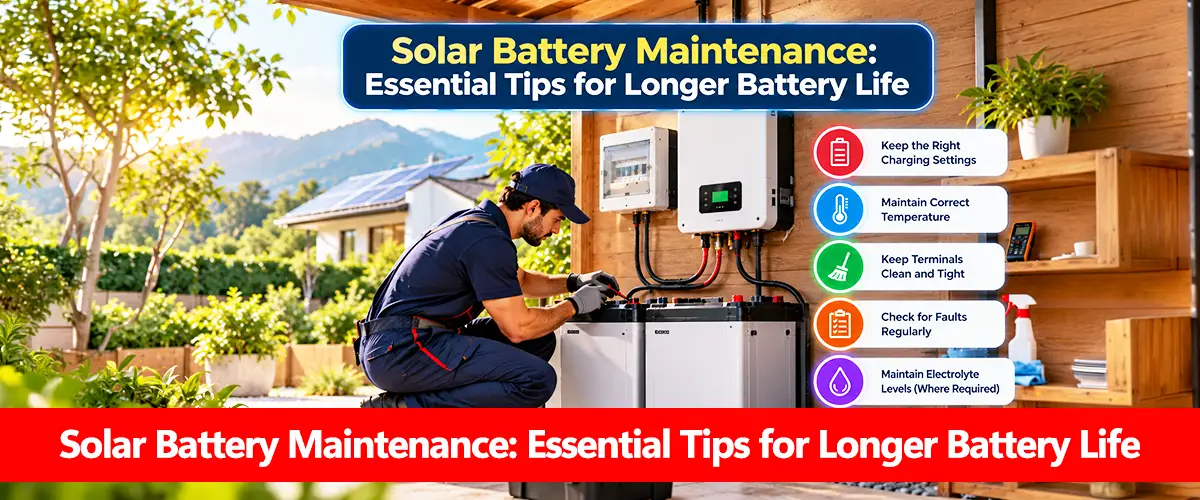
- Keep battery terminals clean and connections secure.
- Maintain suitable ventilation around the battery bank.
- Check for leakage, corrosion or excessive heating.
- Confirm the charger uses correct lead-acid settings.
Electrolyte handling involves corrosive acid and electrical hazards, so servicing should be performed by trained personnel using appropriate protection. Improper charging can also accelerate battery sulfation and reduce storage performance.
Lithium Solar Battery Maintenance
Lithium solar batteries generally do not require electrolyte checks or water refilling. Their maintenance focuses on monitoring battery status, confirming correct charger settings and maintaining safe operating temperatures.
Most lithium storage packs contain a battery management system that monitors voltage, current and temperature. Some systems also display state of charge (SoC), error codes and individual cell information through an inverter or monitoring application.
For lithium batteries, periodically check:
- BMS warnings and communication status.
- Battery temperature and ventilation.
- Charging and discharging behavior.
- Terminal condition and visible damage.
- Manufacturer-recommended firmware or service requirements.
Do not bypass BMS protection or assume all lithium batteries have identical charging limits. Proper maintenance also depends on compatible equipment, as explained in how battery charging works.
Keep Battery Charging Settings Correct
Charging configuration directly affects solar battery performance and lifespan. A hybrid inverter or charge controller must apply the correct voltage, current and charging profile for the installed battery chemistry.
Flooded, AGM and gel batteries may require different lead-acid charging settings. Lithium batteries need compatible voltage limits, charge termination and temperature restrictions. Incorrect settings can cause battery overcharging, undercharging or repeated protection shutdowns.
For lead-acid systems, properly configured bulk absorption float charging can support standby operation. The correct battery charging voltage and current should always follow the battery manufacturer’s specifications rather than generic inverter defaults.
Protect Solar Batteries From Heat and Weather
High temperatures accelerate chemical aging and can significantly reduce battery life. This is particularly relevant in solar installations where batteries may be installed in hot utility rooms, garages or outdoor equipment enclosures.
Keep the battery bank within its approved temperature range and ensure ventilation or cooling arrangements meet manufacturer requirements. Batteries should also be protected from direct sunlight, moisture, dust accumulation and physical damage.
Cold temperatures create different problems. Many lithium battery systems restrict charging below specified temperatures to prevent cell damage. The manufacturer-approved temperature limits should determine system operation, not assumptions based on battery chemistry alone.
Monitor Battery Capacity and Backup Performance
Solar battery maintenance should include monitoring how much usable energy the battery can deliver over time. A gradual reduction in backup duration may indicate battery aging, but changes in household load, inverter efficiency or charging conditions can produce similar symptoms.
The most useful measurements include:
| Measurement | What It Helps Identify |
| State of charge (SoC) | Estimated remaining charge |
| State of health (SoH) | Battery condition and capacity loss |
| Battery voltage | Electrical operating condition |
| Charging current | Charging behavior |
| Battery temperature | Potential thermal stress |
| Backup duration | Changes in practical energy delivery |
Comparing state of charge vs state of health helps distinguish temporary discharge from permanent capacity degradation. Regular monitoring also provides useful information about how long solar batteries last under actual operating conditions.
Practical Solar Battery Maintenance Schedule
A maintenance routine should reflect battery chemistry, manufacturer requirements and installation conditions. The following schedule is a general monitoring example, not a replacement for the manufacturer’s service instructions.
| Maintenance Task | Suggested Check |
| Review inverter or BMS alerts | Regularly |
| Check battery temperature and ventilation | Regularly |
| Inspect visible damage and surroundings | Monthly |
| Check flooded battery electrolyte | Initially monthly; adjust per manufacturer |
| Review charging settings and performance | Periodically and after system changes |
| Inspect electrical connections | During scheduled professional servicing |
| Review battery capacity trends | Every few months |
Flooded batteries may need more frequent attention in hot conditions or during heavy cycling. Lithium systems may provide automatic monitoring, but warning messages and abnormal performance should still be investigated.
Common Solar Battery Maintenance Mistakes
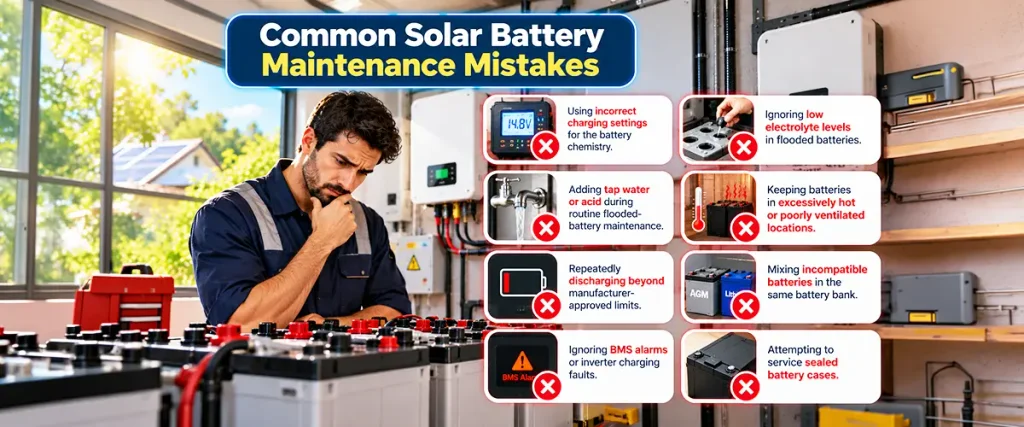
Several maintenance mistakes can shorten battery service life or create safety problems.
Avoid these practices:
- Using incorrect charging settings for the battery chemistry.
- Ignoring low electrolyte levels in flooded batteries.
- Adding tap water or acid during routine flooded-battery maintenance.
- Keeping batteries in excessively hot or poorly ventilated locations.
- Repeatedly discharging beyond manufacturer-approved limits.
- Mixing incompatible batteries in the same battery bank.
- Ignoring BMS alarms or inverter charging faults.
- Attempting to service sealed battery cases.
Excessive depth of discharge and unsuitable charging conditions can accelerate battery aging. Correctly configured storage also depends on appropriate solar battery sizing, because an undersized battery bank may experience more frequent deep cycling.
When Should a Solar Battery Be Serviced or Replaced?
A solar battery should be professionally assessed when it shows unusual heating, swelling, leakage, repeated charging faults or a significant loss of usable capacity. These conditions may indicate battery degradation, installation faults or charging-system problems.
Battery replacement should be based on condition, manufacturer specifications and actual storage performance rather than age alone. If the existing solar setup no longer meets household energy needs, consider whether adding batteries to an existing solar system or replacing the current battery bank is appropriate. For replacement decisions, best battery type for solar explains technology selection, while solar battery prices in Pakistan covers cost considerations.
Conclusion
Solar battery maintenance helps preserve battery performance, charging reliability and long-term energy storage capacity. Flooded lead-acid batteries require electrolyte monitoring and suitable ventilation, while lithium batteries generally need less routine servicing but depend on proper BMS operation and charging compatibility.
Maintaining correct temperature, charging settings and electrical connections can reduce avoidable battery deterioration. Following manufacturer instructions and addressing warning signs early are essential for keeping a solar battery system safe and reliable.
Frequently Asked Questions
How Often Should Solar Batteries Be Maintained?
Maintenance frequency depends on battery chemistry and operating conditions. Flooded lead-acid batteries may require monthly electrolyte checks initially, while lithium batteries mainly need periodic monitoring and inspection.
Do Lithium Solar Batteries Need Maintenance?
Yes, but they generally need less routine maintenance than flooded lead-acid batteries. BMS status, charging conditions, temperature and electrical connections should still be monitored.
Do Solar Batteries Need Distilled Water?
Flooded lead-acid batteries may require distilled-water replenishment. Sealed AGM, gel and lithium batteries must not be opened for routine water refilling.
How Can I Extend Solar Battery Lifespan?
Use manufacturer-approved charging settings, maintain suitable temperatures, avoid excessive discharge and monitor battery condition. Proper care helps support battery cycle life.
Can Poor Maintenance Damage Solar Batteries?
Yes. Incorrect charging, overheating, electrolyte loss and neglected electrical connections can reduce battery performance and create safety risks.
How Do I Know if My Solar Battery Is Failing?
Possible warning signs include reduced backup time, abnormal heating, repeated inverter errors, swelling or leakage. A qualified technician should investigate these symptoms.
Should I Disconnect Solar Batteries When Not in Use?
It depends on the battery chemistry and system design. Some systems require approved storage settings or periodic charging, while others support monitored standby operation. Follow the manufacturer’s instructions.
Can Solar Panels Work Without a Battery During Maintenance?
Some grid-connected solar systems can operate without batteries, depending on their inverter design. Other installations require functioning battery storage for certain operating modes. Our solar panels without batteries guide explains these differences.